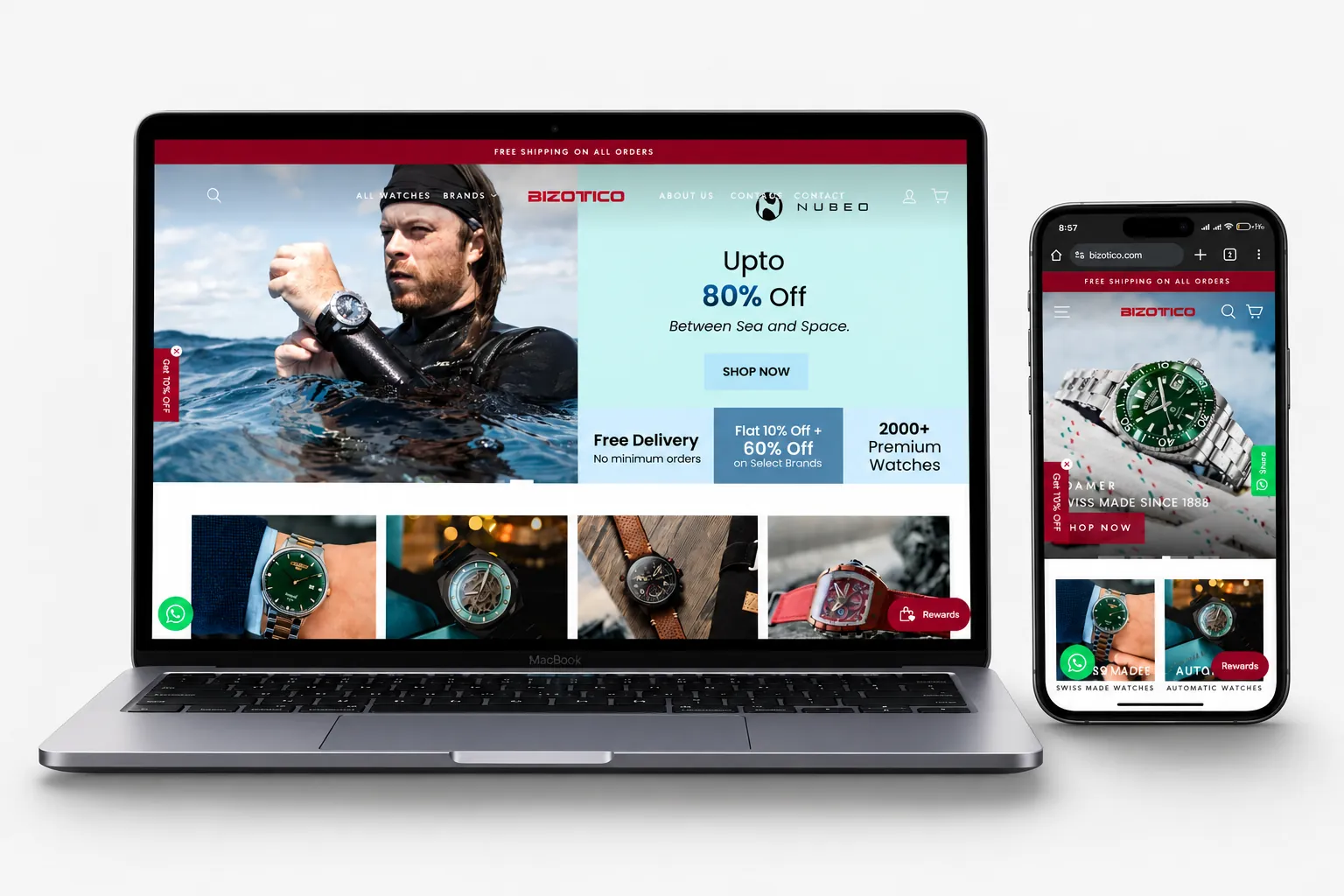
Bizotico is a Bengaluru distributor that holds the Indian rights to 25+ watch brands, Scuderia Ferrari, Roamer, Obaku and Earnshaw among them. I designed its direct store, which still runs today as The Timekeepers.
Role
E-commerce Designer, leading a graphic designer alongside the marketing team
Timeline
6 months, 2024, Bengaluru
Platform
Shopify, desktop and mobile
My work
Information architecture, flows, UI/UX, the Shopify build and the campaign creative system
The same watches were a tap away on Amazon and Myntra. My job was to give buyers a reason to skip them.
The store as it shipped, on desktop and on a phone.
The problem
Every watch sold through a marketplace cost Bizotico margin, and an earlier direct store had never become a real sales channel.
The new one had to hold 25+ brands, priced from under ₹5,000 to above ₹60,000, in a single catalogue without the premium lines looking like the cheap ones. Most buyers would arrive on a phone and want to pay cash on delivery.
Key decisions
01
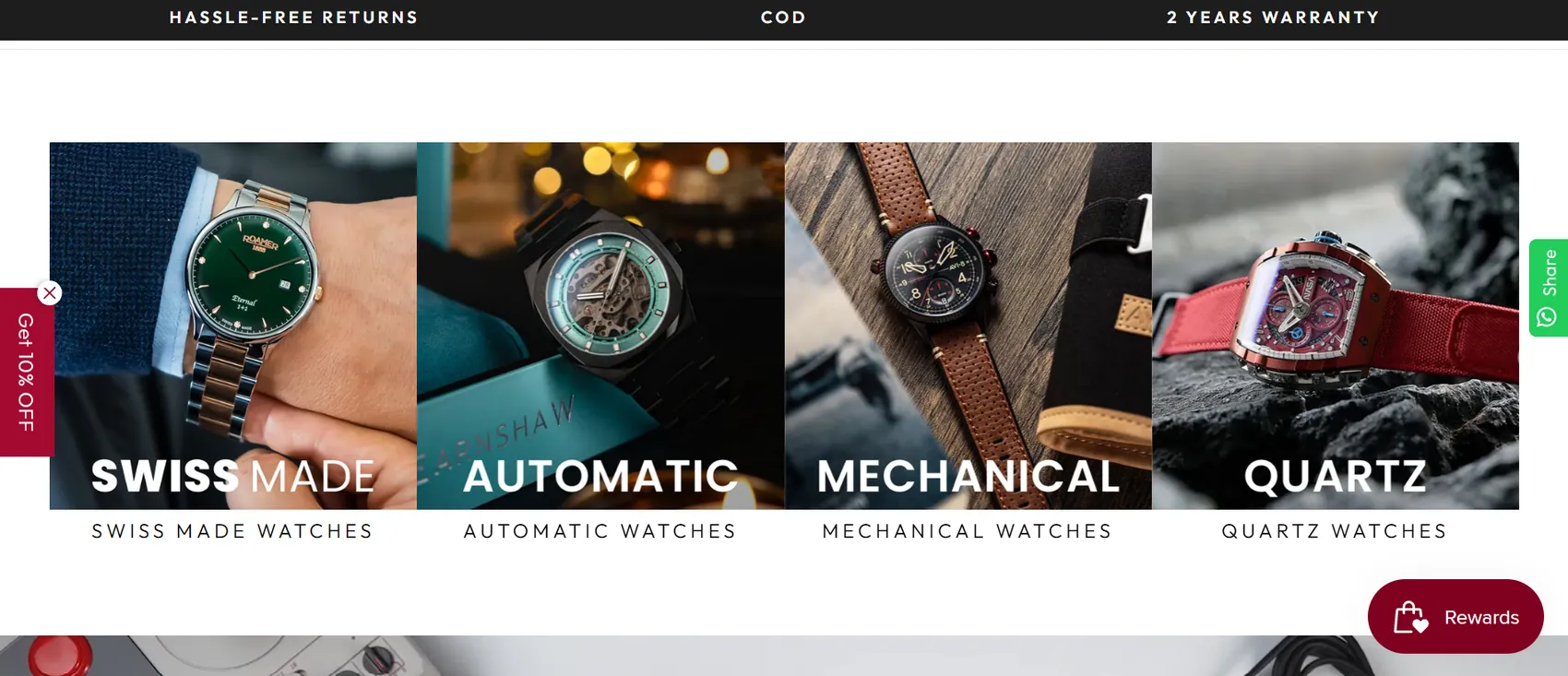
Categories came from what people search for
I ran a basic keyword pass on what watch buyers in India actually type.
Swiss made, automatic, mechanical and quartz came back highest, so those four became the categories on the homepage. Movement, strap and price sit under a Shop by menu for anyone who wants to narrow further.
Four categories, named after what buyers were already searching for.02
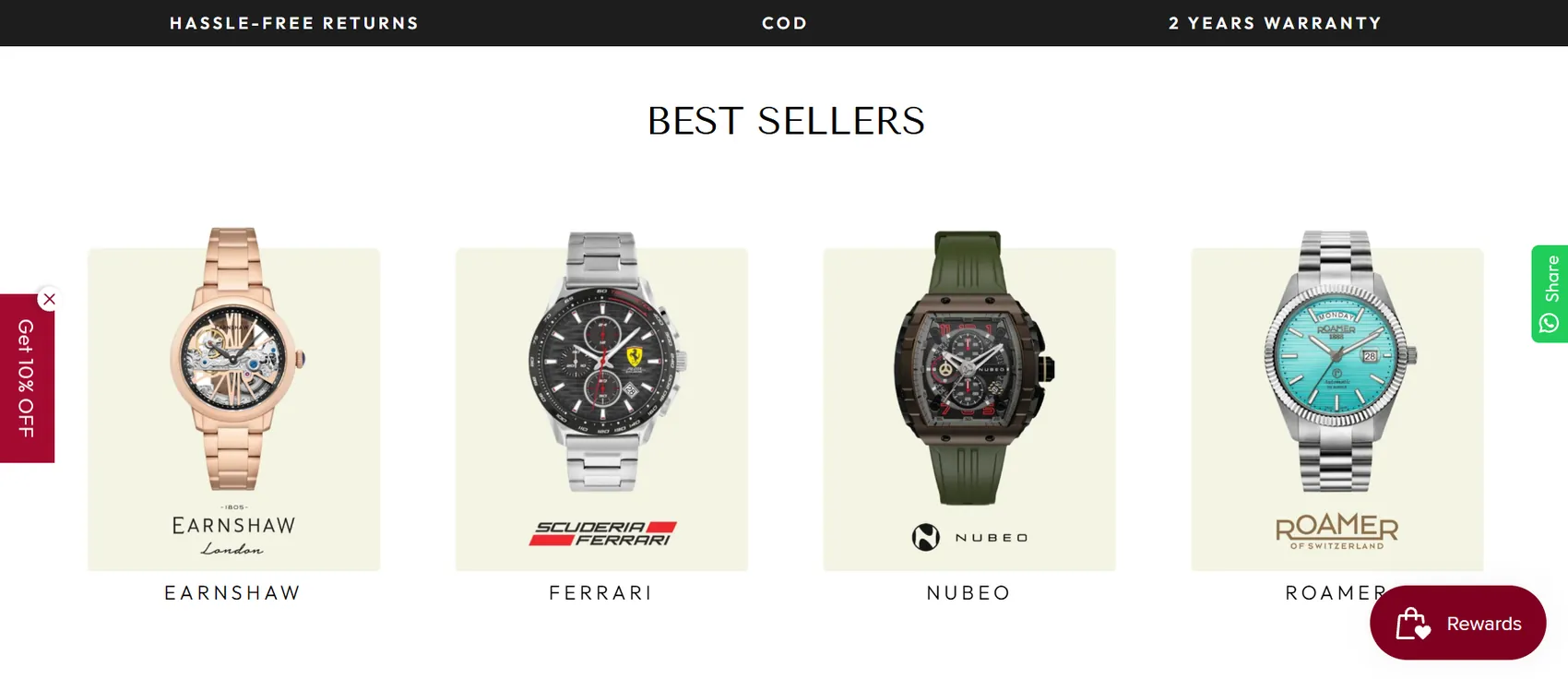
Put the partner brands on the top shelf
The partnerships are the reason to trust a distributor, so they go first.
Earnshaw, Scuderia Ferrari, Nubeo and Roamer take the row directly under the hero, each sitting on its own logo rather than a product name, because the brand is what a buyer recognises from across the page.
The first row under the hero, and the trust bar that runs above every page.03
Two years of warranty, five on Obaku
A marketplace listing cannot offer a warranty from the distributor who imported the watch.
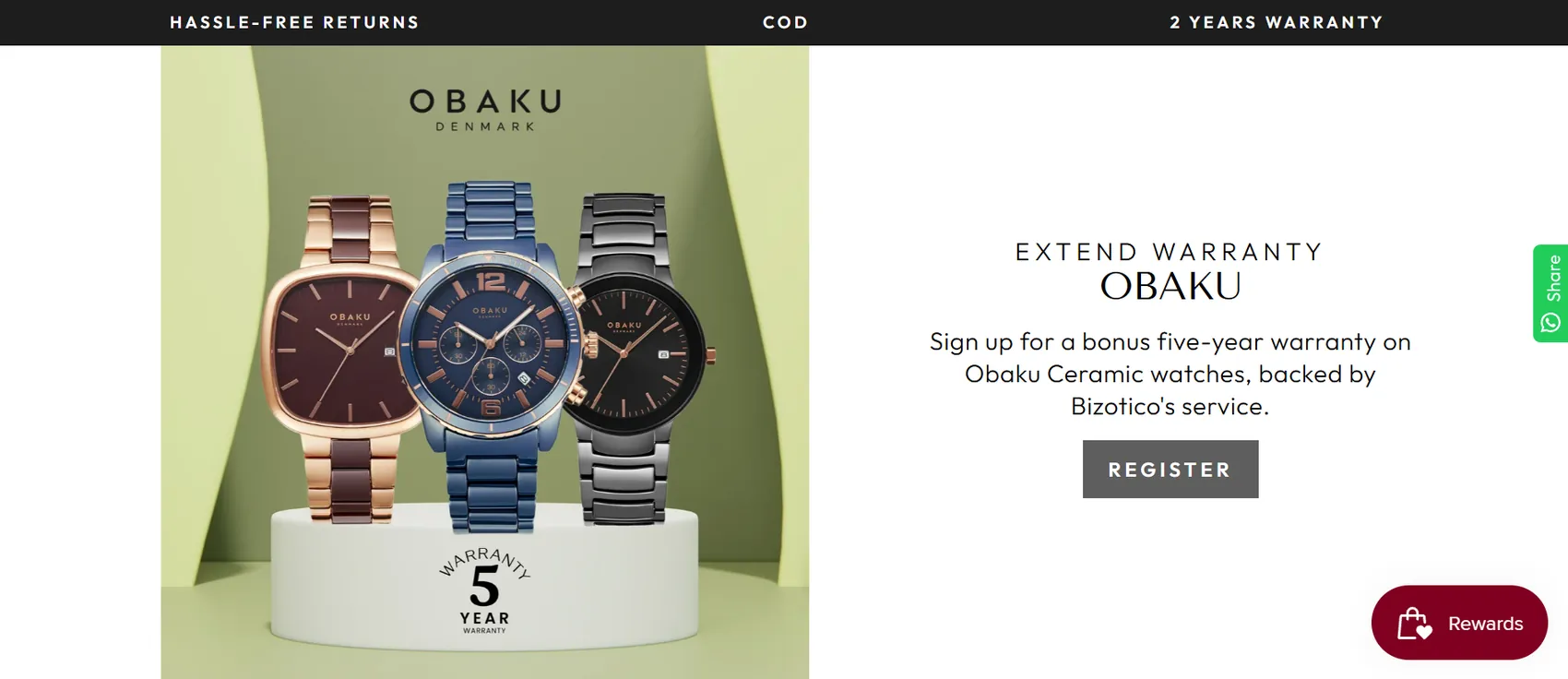
We took the call to put 2 years on everything bought on the site, and Bizotico backed a bonus five-year warranty on Obaku Ceramic.
I built the flow for that one, from the homepage block through the registration a buyer completes once the watch arrives.
The five years are claimed by registering, which is where the flow starts.04
Borrowed the trust the shop already had
A new store has no reviews.
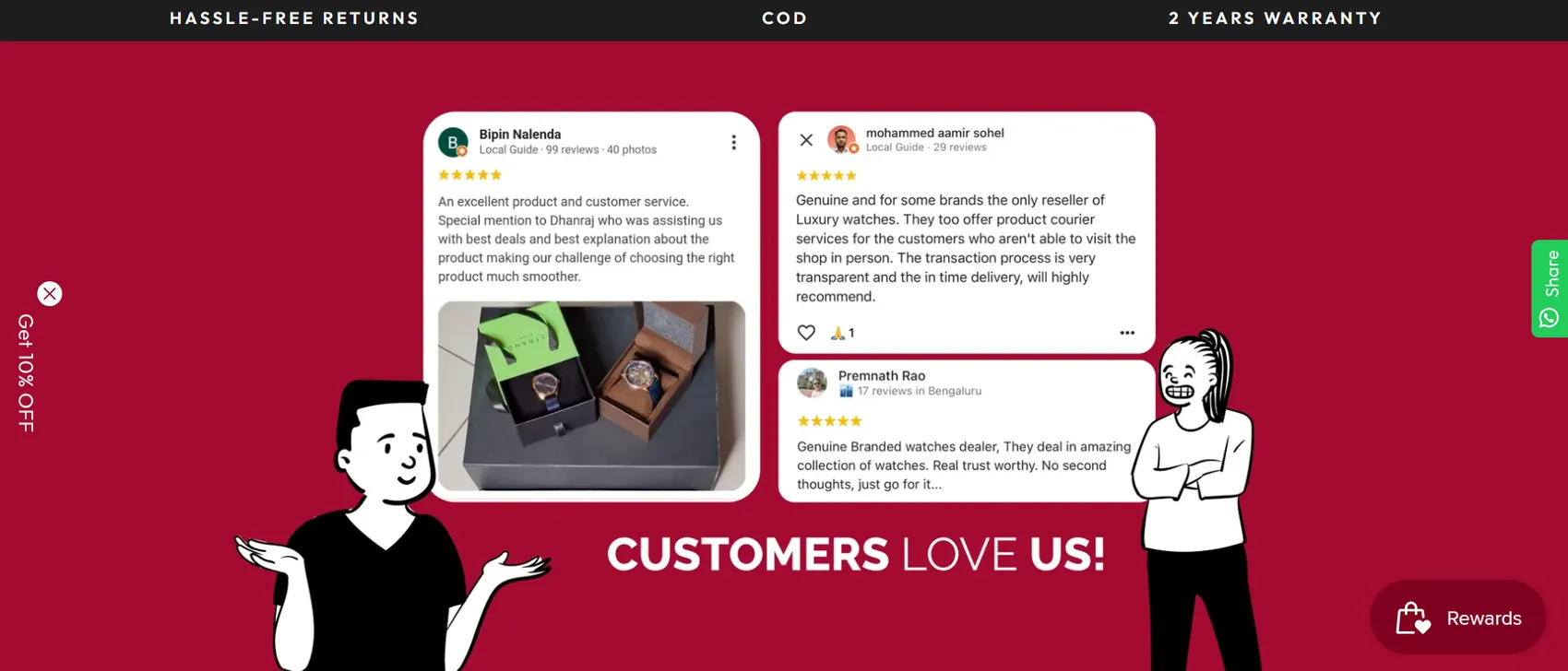
The Bengaluru shop had years of them on Google, so those went on the homepage with the reviewer's name and photo left intact. The identifying detail is what makes social proof work, so it stayed.
Under them, a Partners block names Amazon, Flipkart, Myntra, Tata Cliq, Helios and Just In Time as places Bizotico already supplies, which is the shortest proof that the stock is authentic.
Trade-off: Naming the marketplaces reminds buyers they exist. Proving the watches are genuine was worth more.
Google reviews from the offline shop, running on the new store's homepage.05
Curated the sale
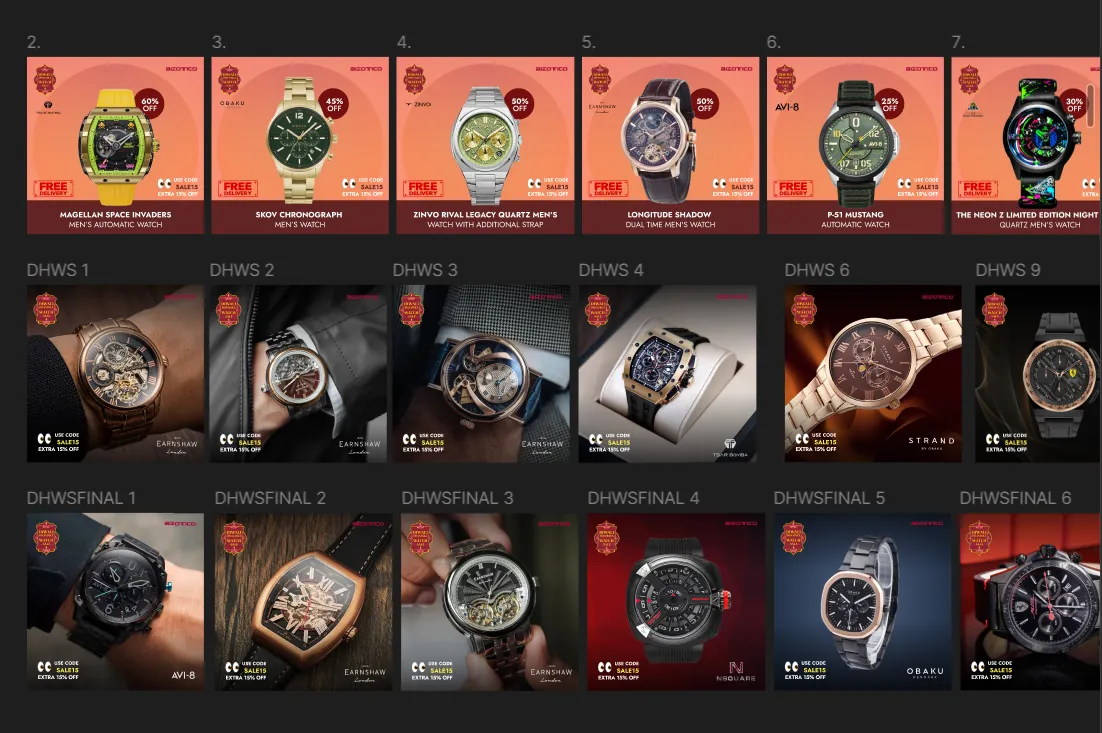
I picked the watches, then set the discount brand by brand.
Fashion labels went deep, premium lines held between 5% and 20% so they never read as clearance. One fixed template meant a single designer could produce a creative for every brand, and each ad links straight to the watch in it.
Part of the sale set. One template, one designer, 25+ brands.
Outcome
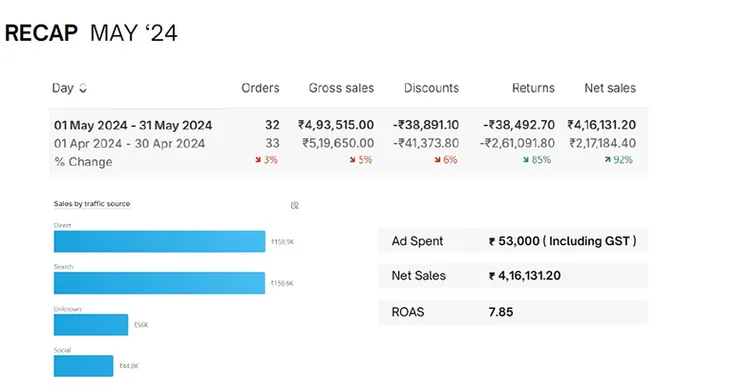
7.85xROAS on the May 2024 campaign: about ₹53,000 in ad spend against ₹4,16,131 in net sales. The marketing team ran the ads.
Orders held flat that month, 32 against April's 33, while net sales rose 92%.
25+ brands the client adds to and runs without a developer.
Still live more than two years later, as The Timekeepers.
The May 2024 recap, as the client's dashboard reported it.
Reflection
Set the template tiers on day one. Leading with brands worked, but every new brand meant another row and another banner. Fixed tiers for premium and fashion lines would have cut that setup every time.