Rishabh Kumar
Work Desserts Contact
Home

Supaca

Designing trust for a private network of supercar owners

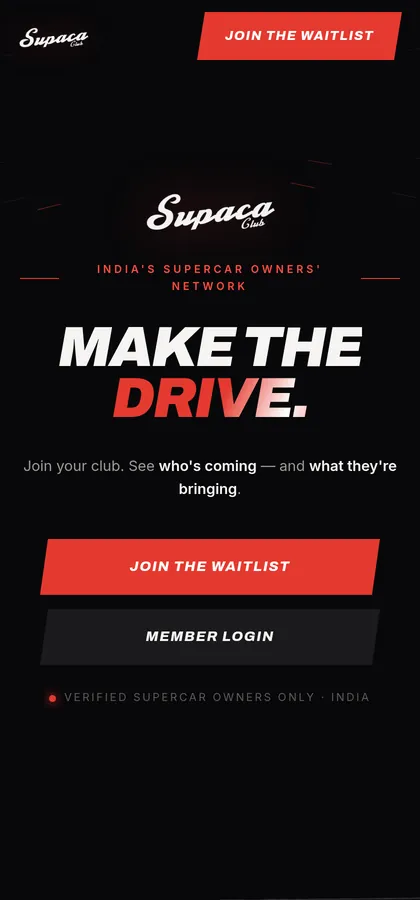
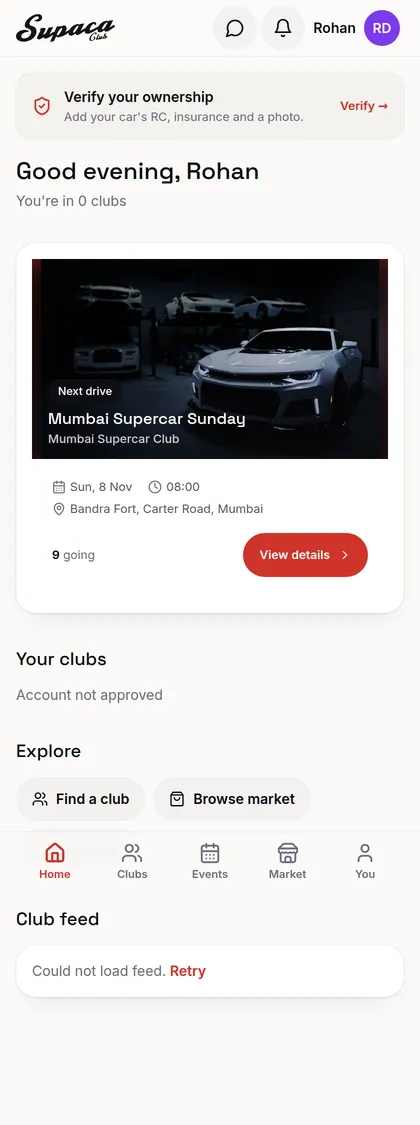
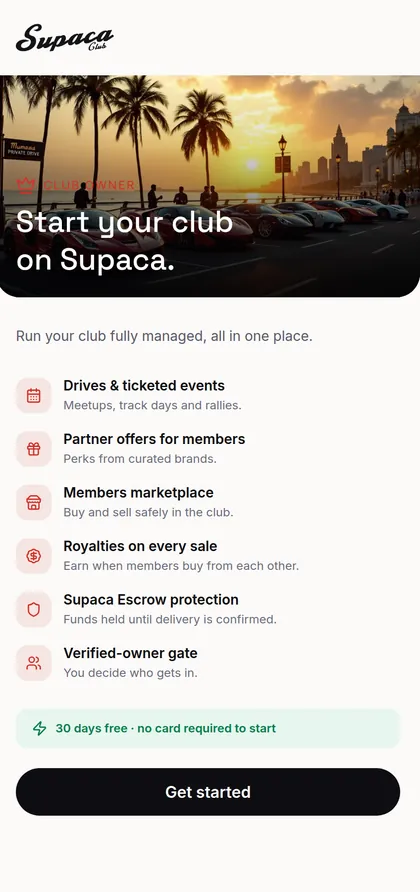
Supaca is a members-only app for verified supercar owners in India, where clubs run their drives and members RSVP with the car they're bringing. The beta is live, with real owners on the waitlist. This case study covers the design, which I led end to end.

Role
Lead UI/UX Designer
Team
A team of five, the CEO overseeing: me leading design, another UI/UX designer, and the full-stack developers who built it
Timeline
A year, 2023 to 2024, beta now live
Platform
Mobile-first web app
My work
User research, information architecture, the access model, onboarding and verification, visual design, and every screen

Supaca only works if every member knows everyone else is a real owner. The hardest part was designing a gate strict enough to make membership mean something, while keeping joining simple.

The problem

Supercar owners in India already had clubs, but no product built for them.

As a product designer at one of those clubs, I saw how they actually ran: on scattered WhatsApp groups. There was no way to verify who owned a car, drives were organised through forwarded messages, high-value sales ran on trust, and expensive cars sat parked for weeks with nowhere to go.

That set the bar: a network where every member is a verified owner, and the next drive is there when you open the app.

Users

ArchetypeWho they areWhat they need
Member A verified supercar owner The next drive, and who's coming with what car
Club owner Runs a club and invites members Growth tools, and a way to vet who joins
Vendor Dealerships, detailers and tuners Reach, at arm's length from members
Admin Approves members and claims A human check at the end of every gate

Research

Through my club, I had direct access to owners and organisers, and tested ideas with them throughout.

I mapped real clubs and their access rules (open, private, referral-only, women-only). Three findings shaped the design:

  1. Owners would only join a network where every member was verified.
  2. Owners wanted somewhere to drive. The event was one of the main reasons to come back.
  3. Clubs already existed. The product had to bring them in instead of replacing them.

I also flagged the cold-start risk early, and we agreed on one rule: never fake a member, an attendee or a listing.

Process

I fixed the information architecture, wireframed the core flows, and tested them with owners before any visual design.

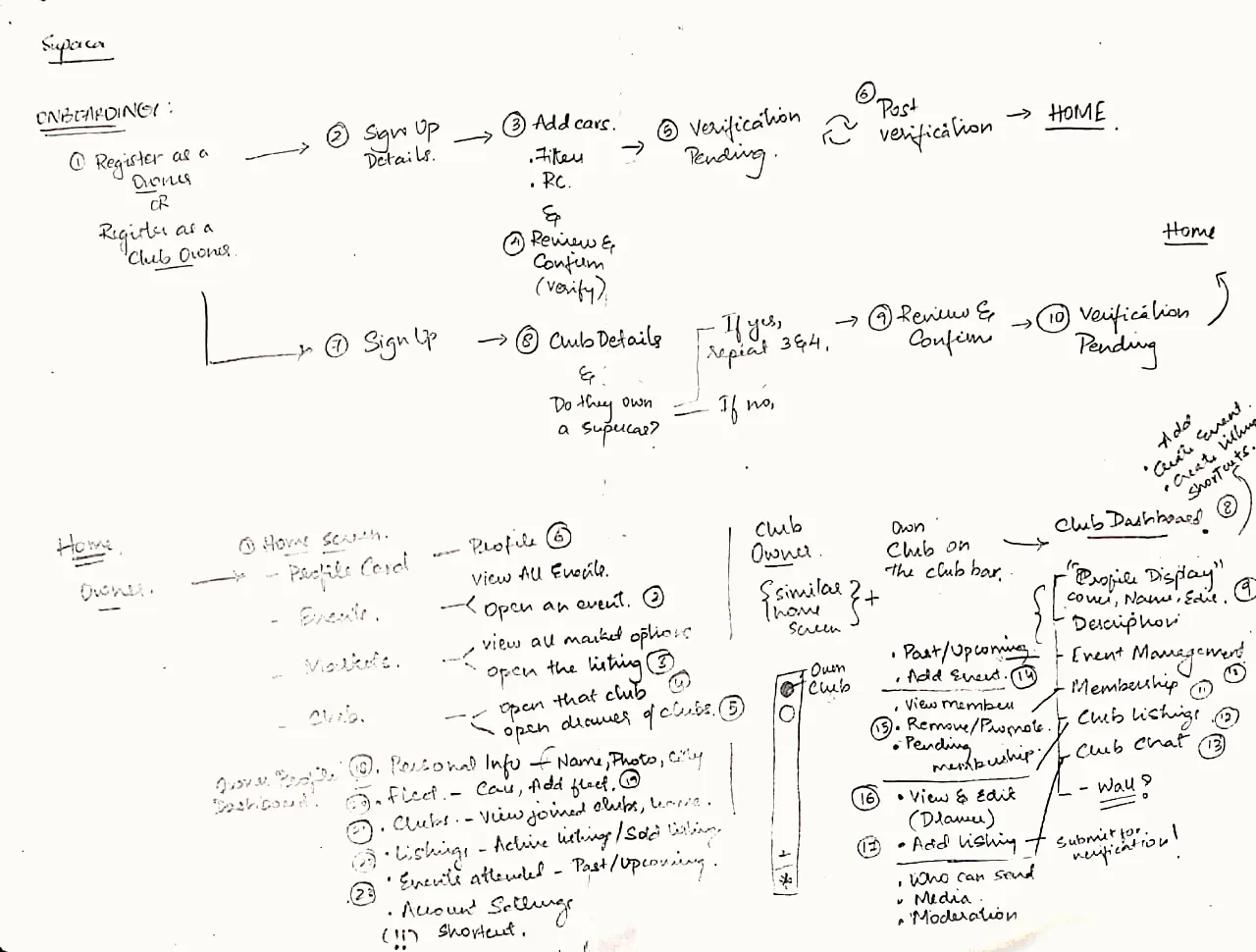
  • A hand-drawn onboarding flow for Supaca: register as an owner or a club owner, sign up, add cars with the registration document, review and confirm, verification pending, then home. Under it, lists of what the home, owner profile and club dashboard screens each hold.
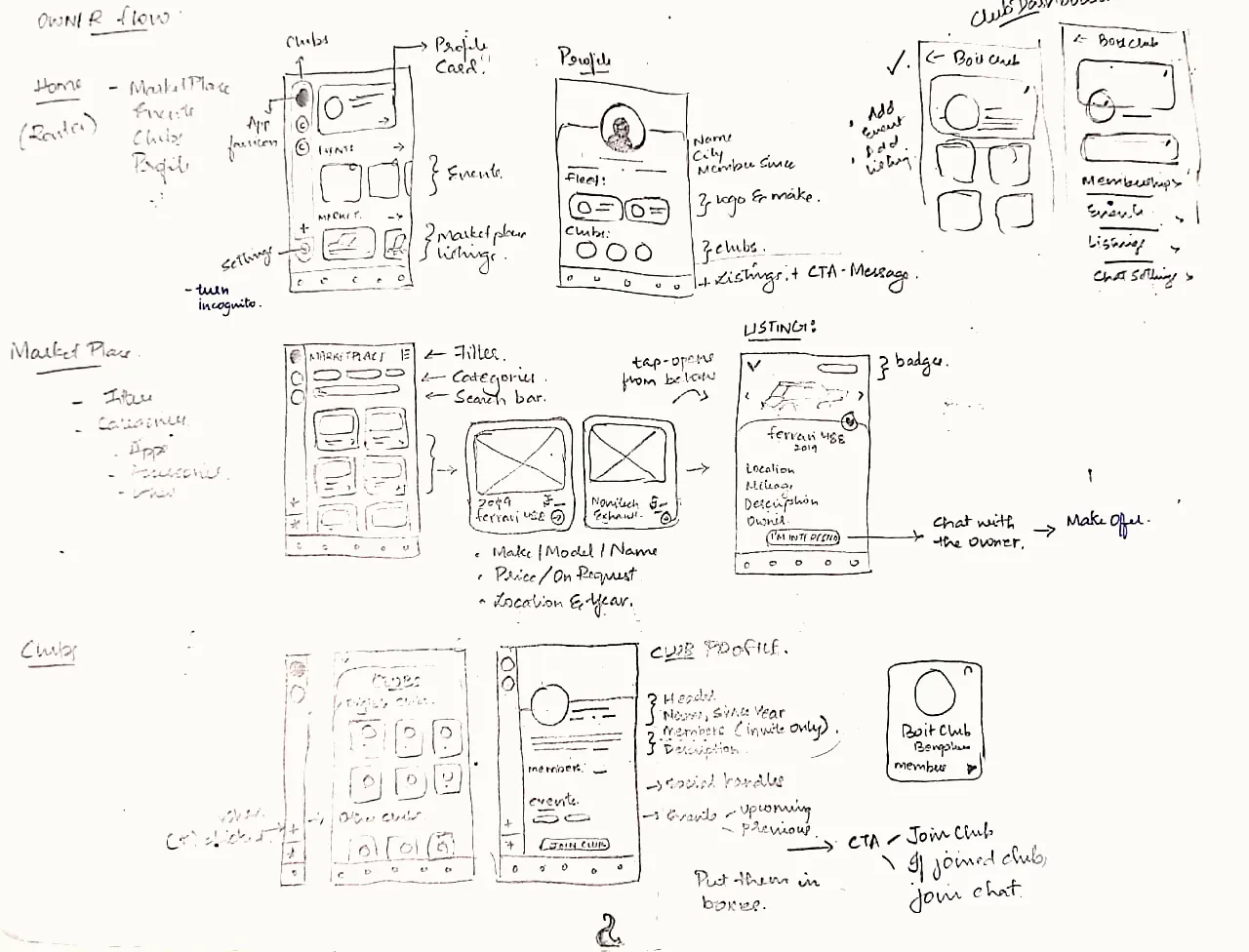
  • A hand-drawn owner flow for Supaca: the home router across marketplace, events, clubs and profile; the marketplace with filters, categories and a car listing that leads to a chat with the owner; and the clubs grid leading to a club profile with a join-club action.
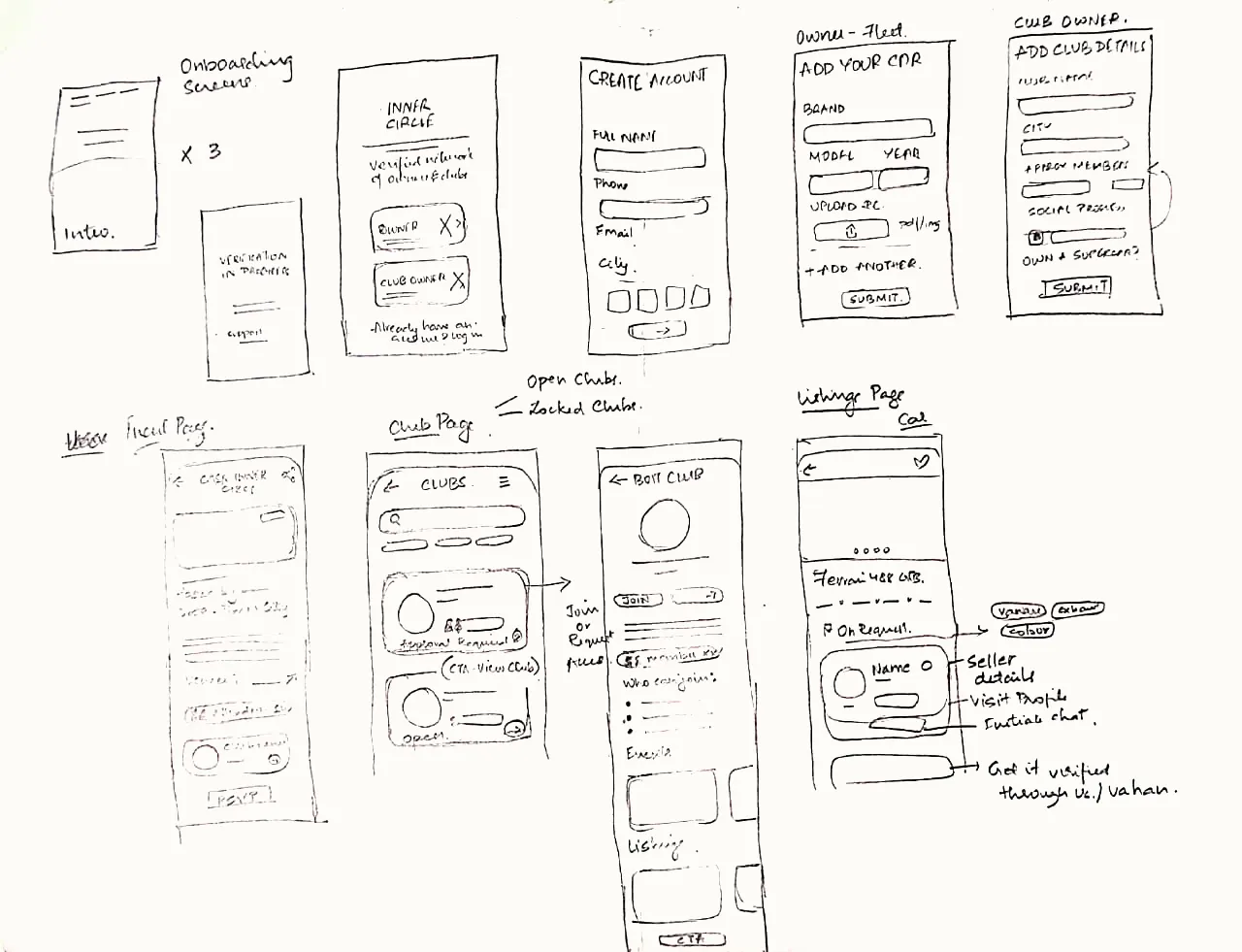
  • Hand-drawn Supaca wireframes: three intro screens and a verification-in-progress state, create account, add your car, add club details, then the event page, the clubs list, a locked club page with join or request access, and a car listing page.
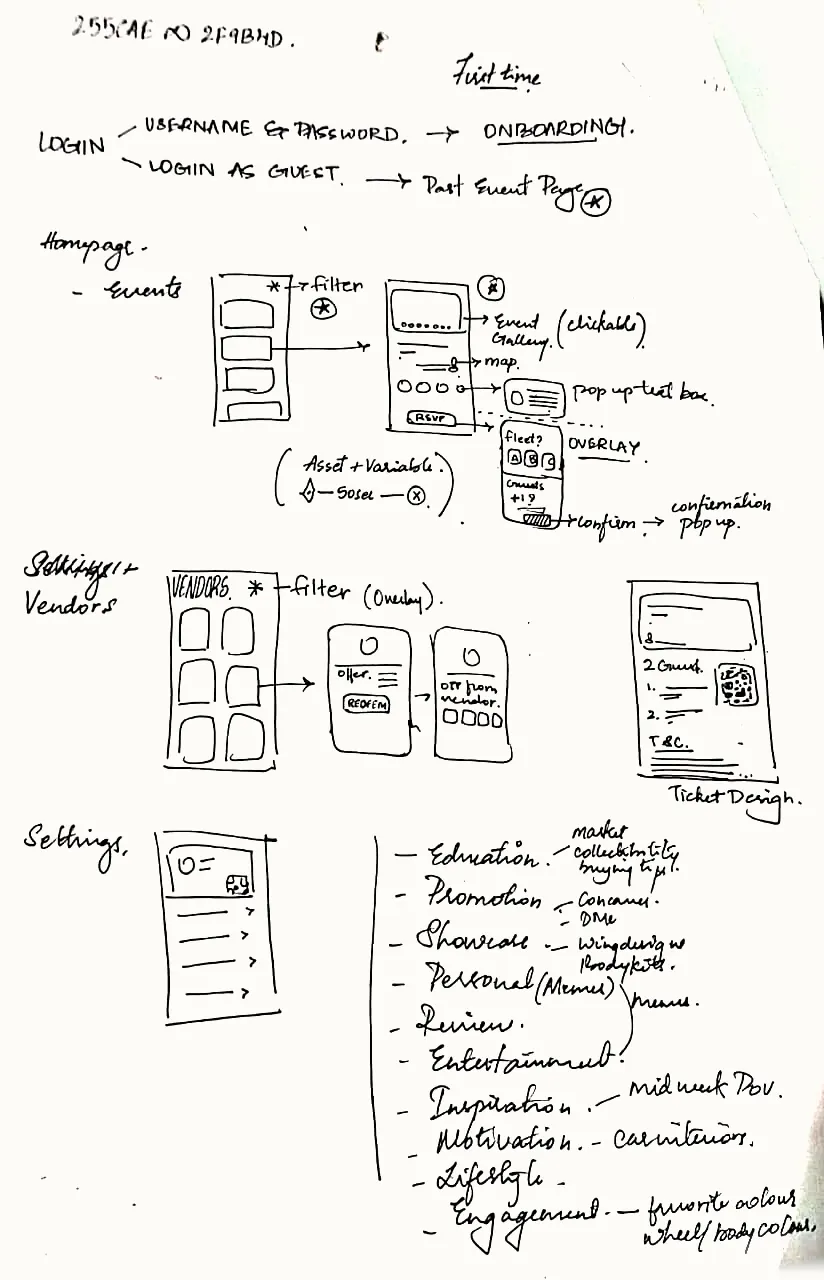
  • A hand-drawn page of Supaca wireframes: login leading either to onboarding or to a guest view of past events; the events homepage with a filter, an event gallery, a map and an RSVP overlay that asks which car you are bringing; a vendors list with an offer overlay; and a settings screen.
Flows and wireframes on paper, before any screen was drawn.
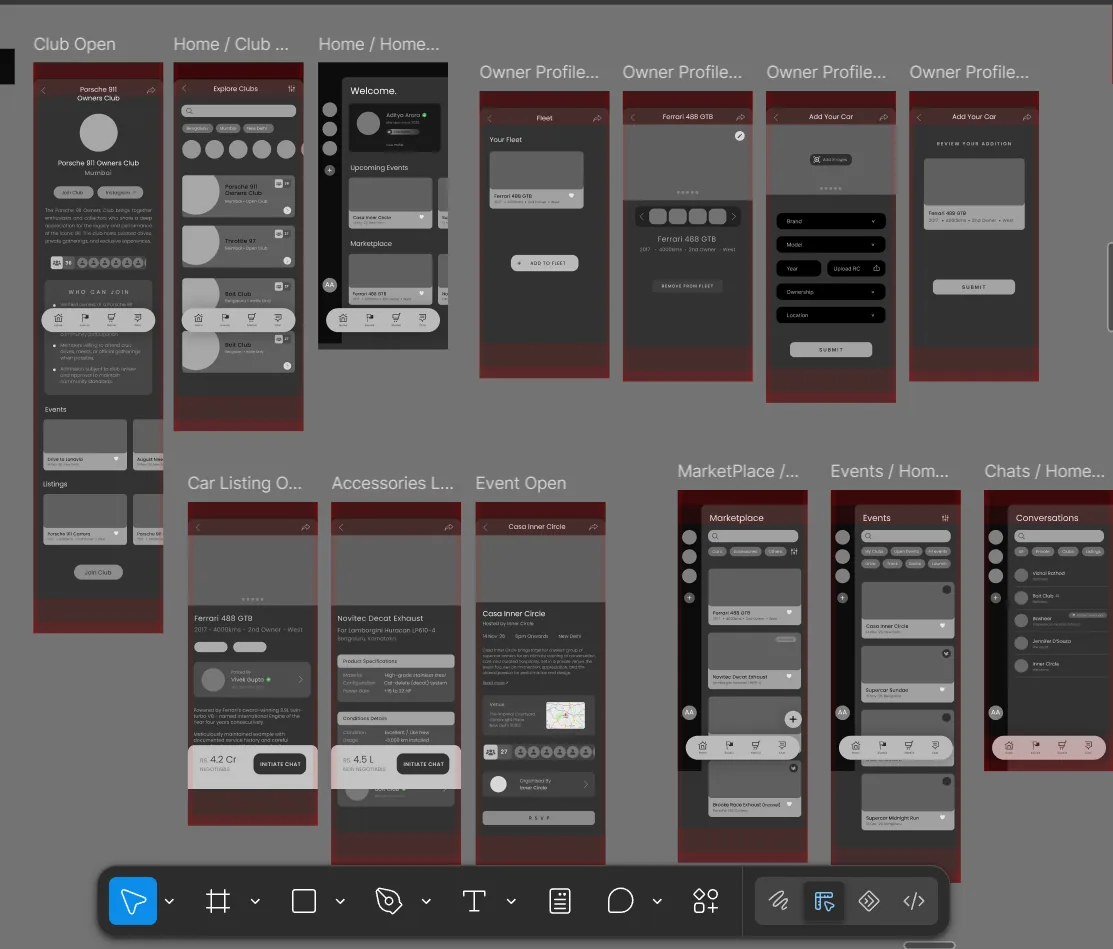
A Figma canvas of grey wireframes: a club page, the explore-clubs list, home, the owner profile with a fleet and an add-your-car form, a car listing, an accessories listing, an event page, the marketplace, events and chats.
The same flows in Figma, still grey, before the visual design.

Key decisions

01

Five ways in cut to three
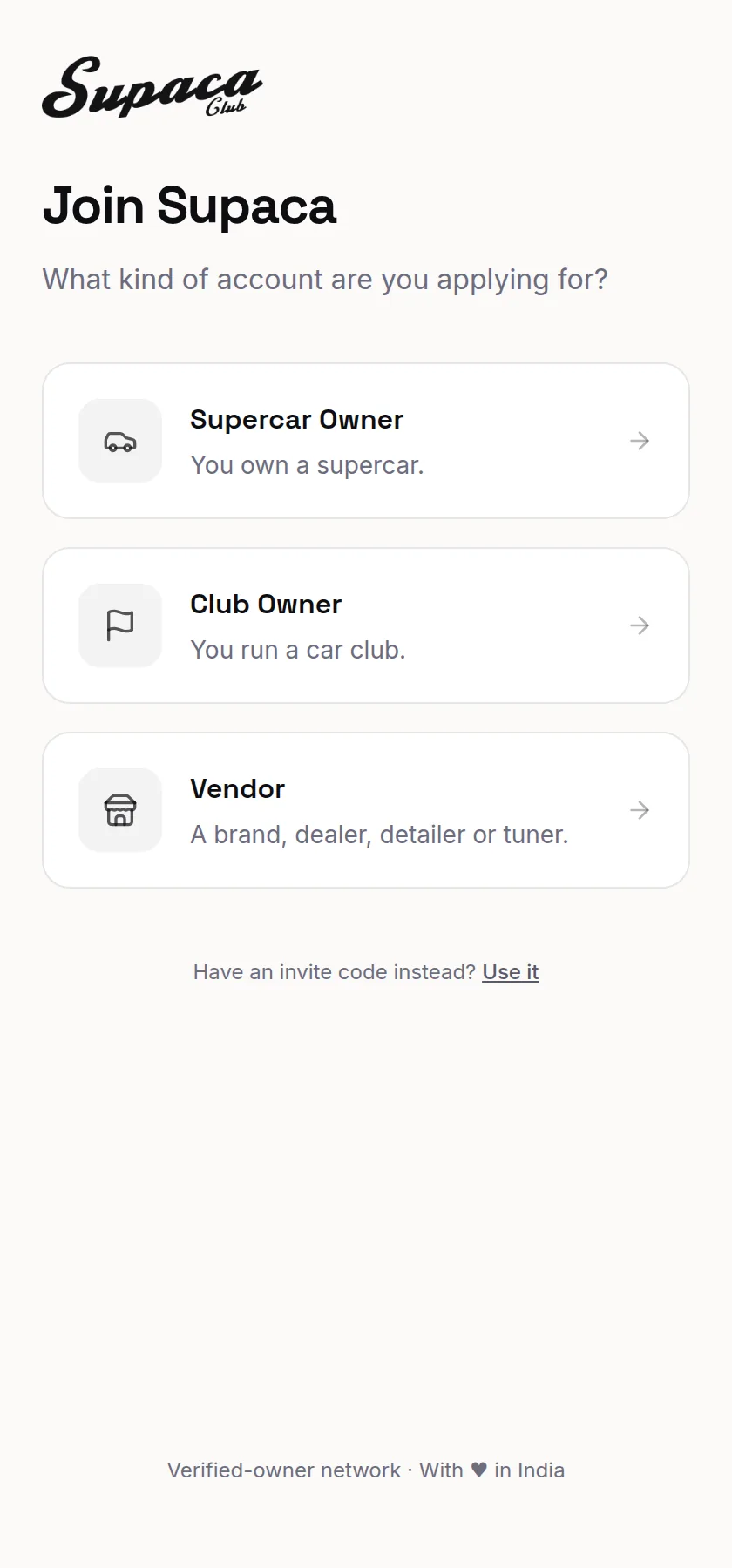
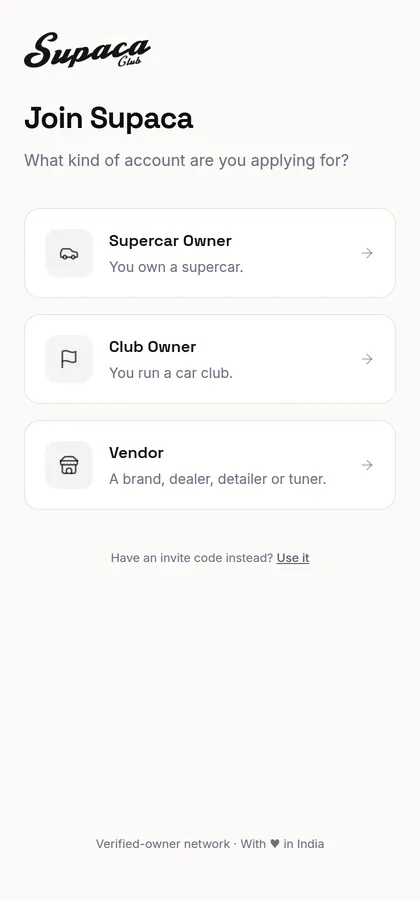
The Join Supaca screen: three doors, Supercar Owner, Club Owner and Vendor, each with what it unlocks, and an invite-code link underneath.
One question at the door. Three doors, down from five.

We started with five: explorer, enthusiast, owner, club owner and partner.

The social wall was the reason, and spotters and enthusiasts would have filled it quickly. It would also have undone the point, because owners don't want an audience.

We cut it to three entry points, owner, club owner and vendor, with one rule behind the gate: you're verified, or you're waiting. Everyone inside either owns the car or serves someone who does.

Trade-off: We gave up the audience the social wall would have pulled in, which was the fastest way to look busy before the network was real.
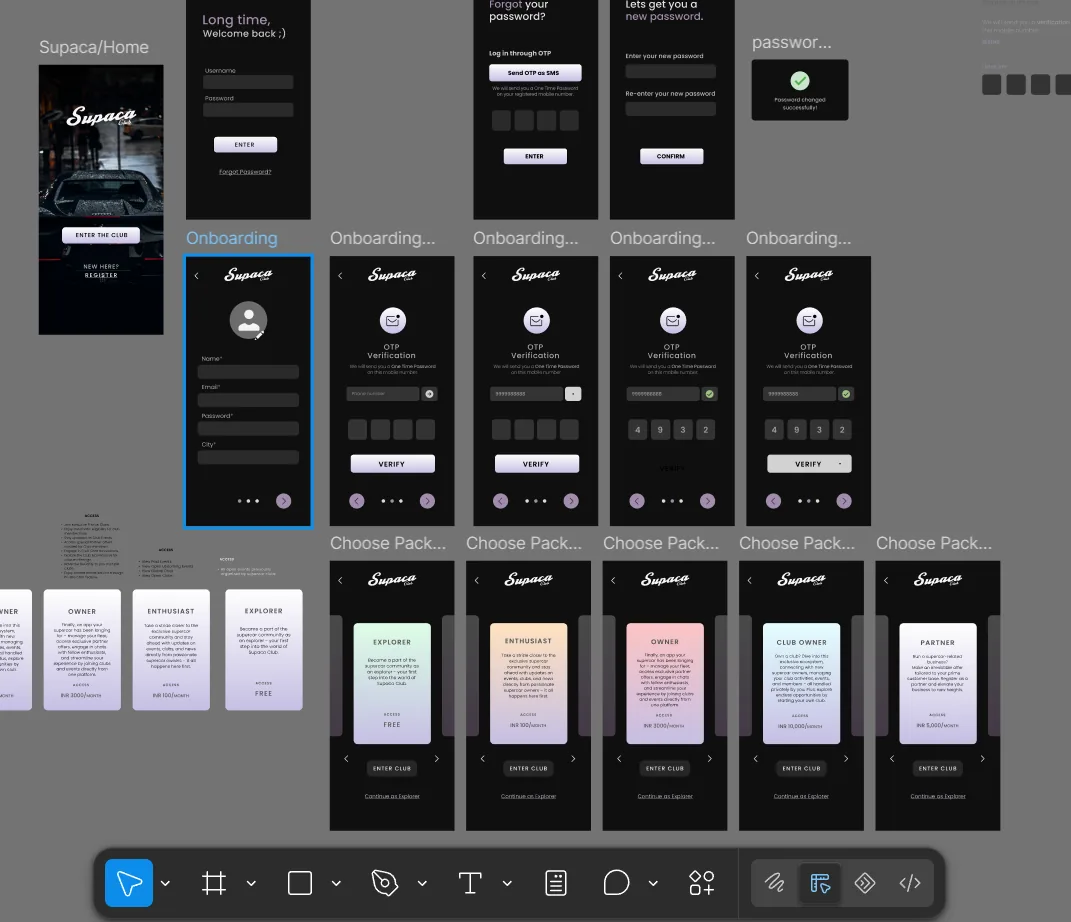
A Figma canvas of the older design: a home screen, a login, password recovery, five onboarding screens, and the five packages that were cut - Explorer free, Enthusiast, Owner, Club Owner and Partner, each with its own monthly price.
The older design, with five entry points.
02

Verification through the garage

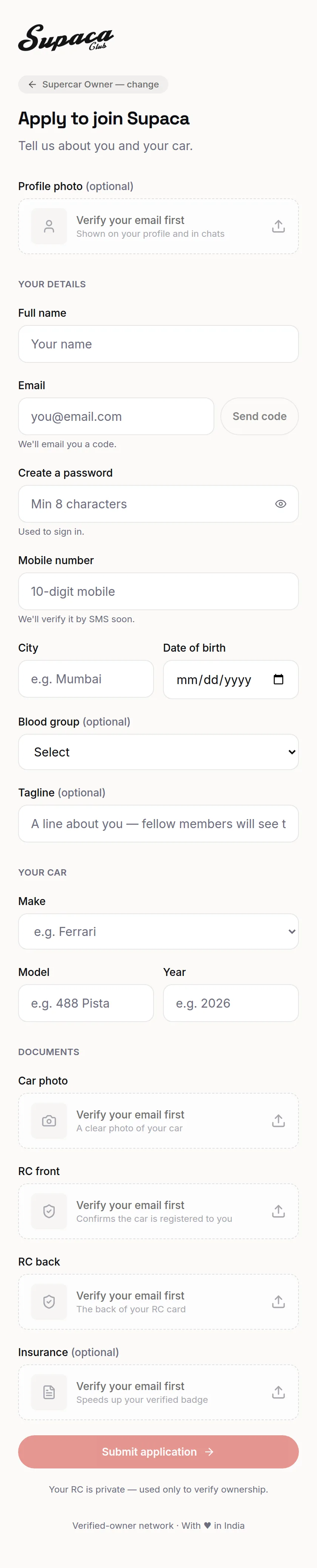
The application form: profile photo, name, email, password, mobile, city and date of birth, then the car's make, model and year, a photo of it, the registration certificate front and back, and insurance, with a note that the RC is private and used only to verify ownership.
Apply with your car: make, model, RC front & back. “Your RC is private — used only to verify ownership.”

Scroll inside the frame

A member proves who they are by verifying their car.

One registration document proves both identity and ownership, an admin approves it, and until then the app stays locked.

Trade-off: Verification adds friction at signup, and for an exclusive network that friction is what makes membership worth having. That is effort justification, and we spent it on purpose.

03

Nobody lands in a club they didn't pick

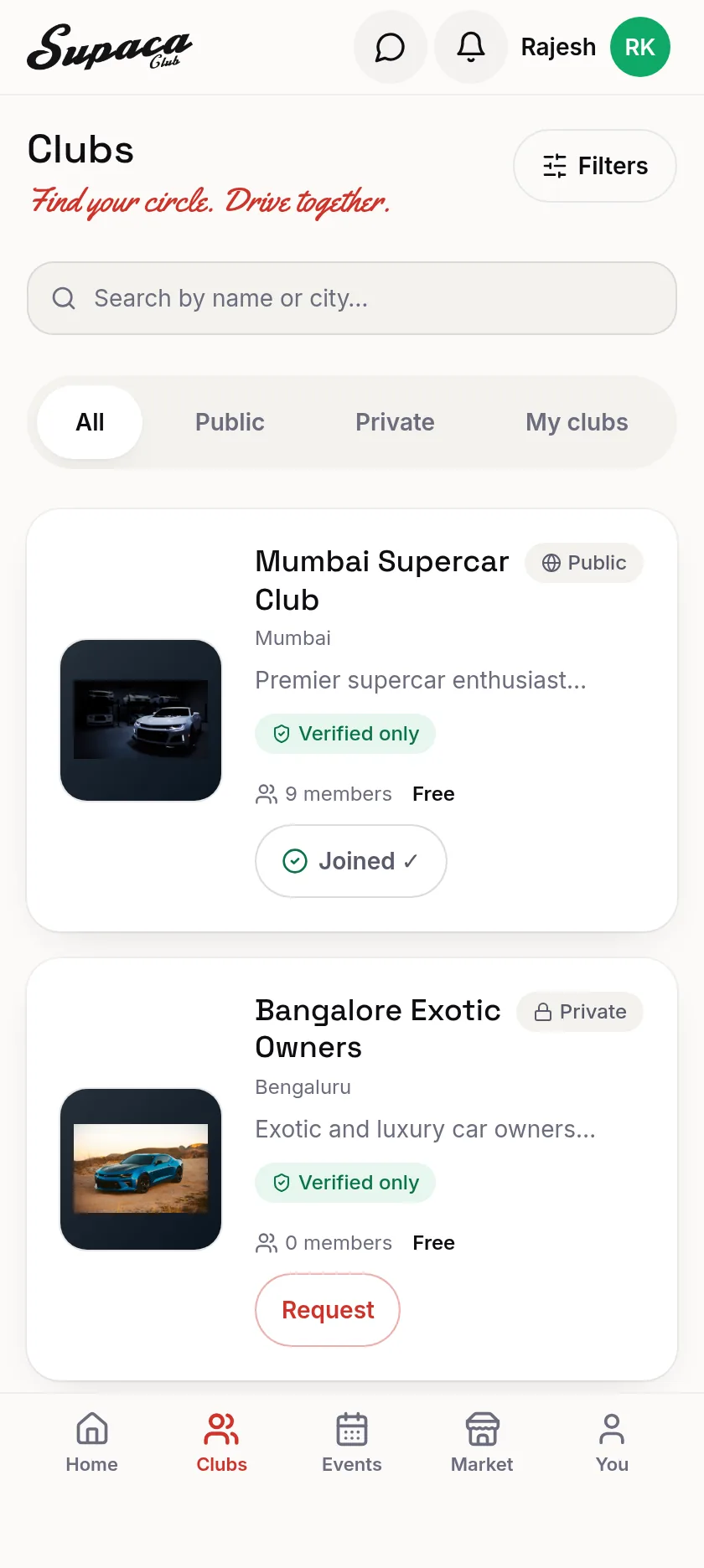
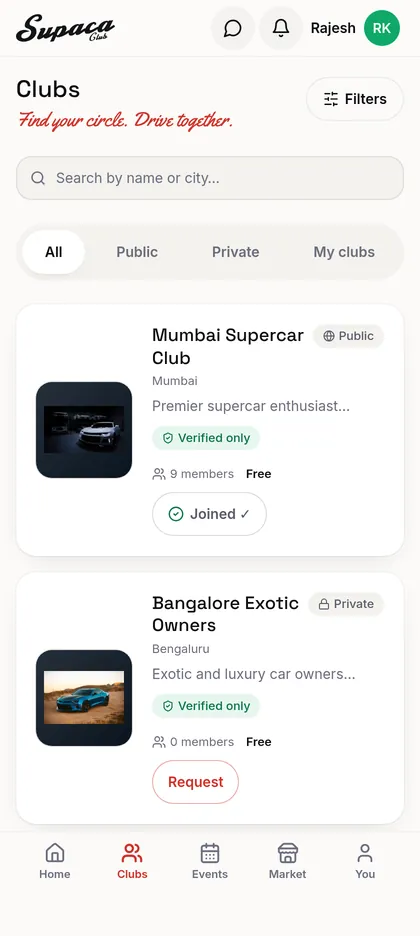
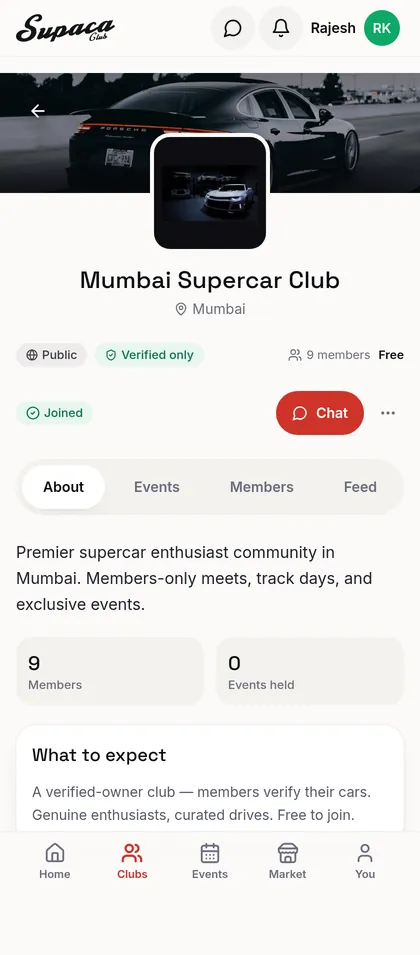
The clubs grid: Mumbai Supercar Club, joined, and Bangalore Exotic Owners, private, each with its city, member count and a verified-only badge, over a search field and public, private and my-clubs filters.
Clubs grid — drawn by area and by who knows whom.
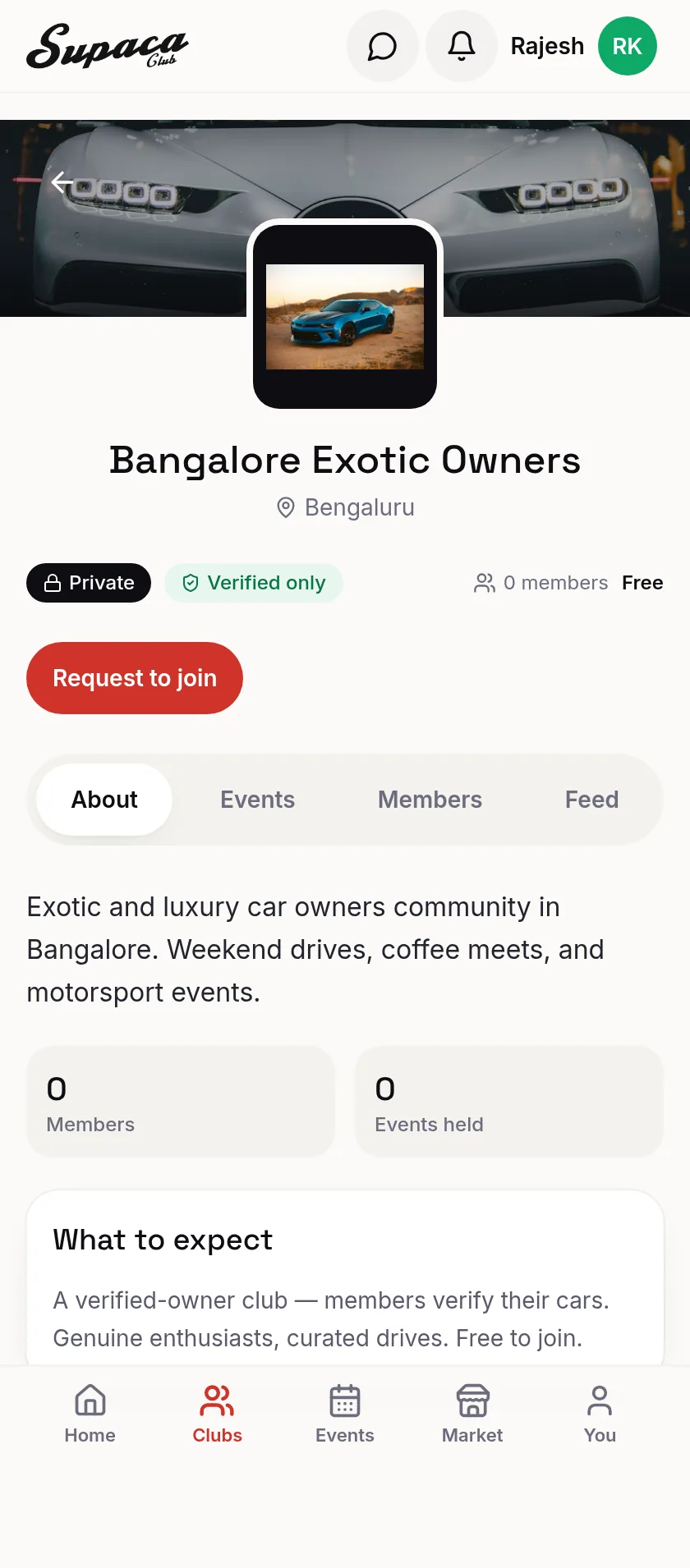
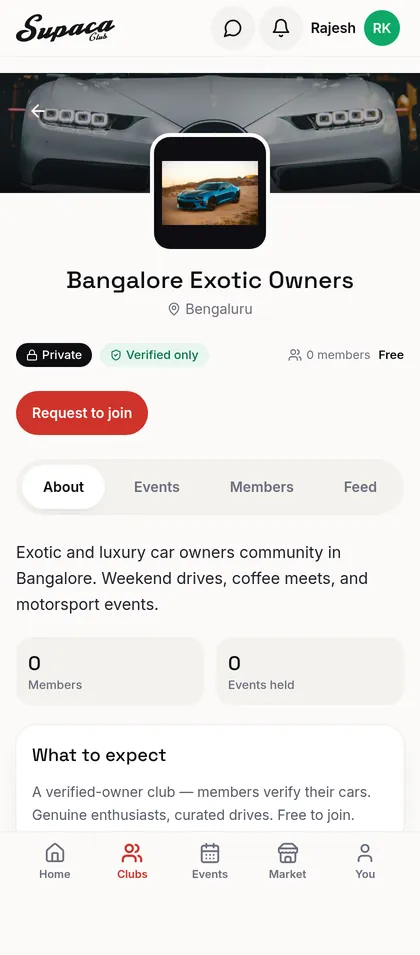
A private club page for Bangalore Exotic Owners: a Request to join button where a joined club shows chat, a verified-only badge, no member named, and tabs for about, events, members and feed.
A private club: “Request to join”, verified-only, nobody named.

We had a way to make the app look full on day one: drop every Porsche owner into the Porsche club in their city, and everyone else into one generic supercar club.

We didn't do it. It would have added strangers to each other's clubs with nobody agreeing to it, and an in-group nobody consented to join stops being one. The clubs that already exist here are drawn by area and by who knows whom.

Members join by choosing to, or by an owner's approval. Where verified and unverified people meet, nobody is named until they choose to be, and avatars are initials.

04

RSVP with your car

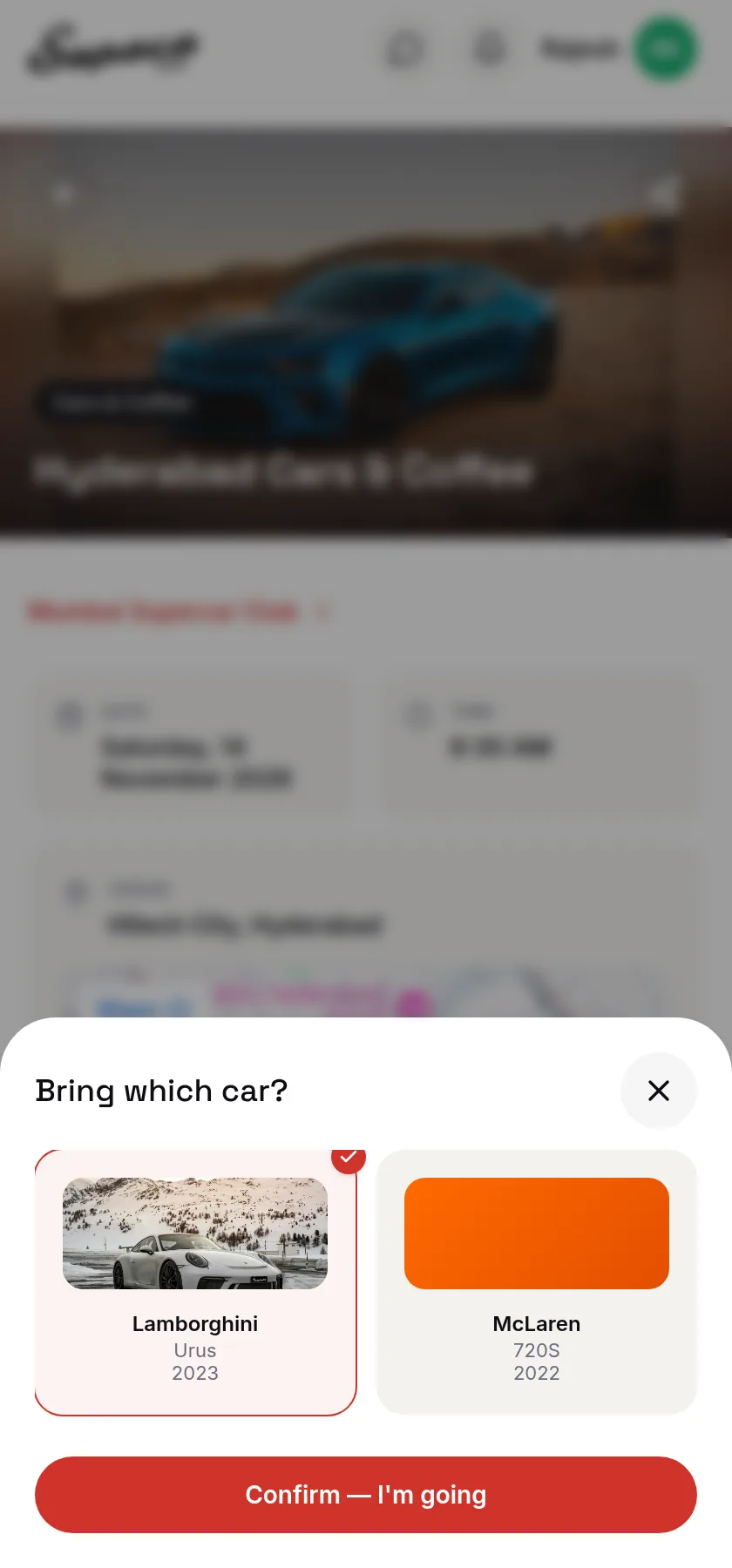
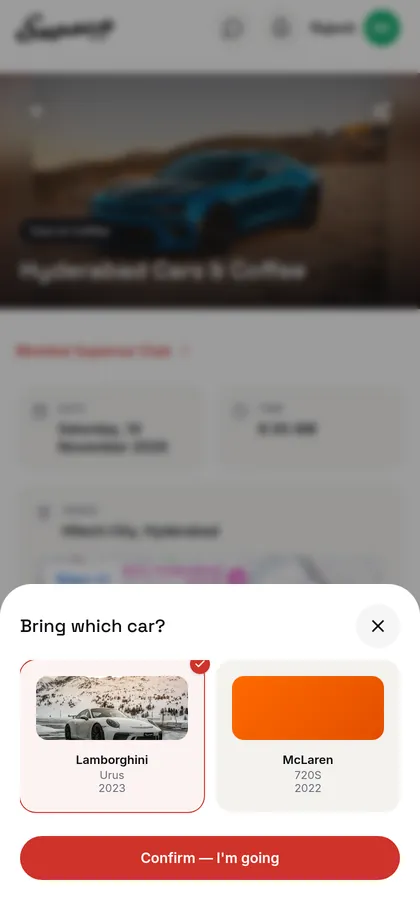
The RSVP sheet over an event: Bring which car?, with a Lamborghini Urus selected beside a McLaren 720S, and a Confirm, I'm going button.
RSVP asks the only question that matters here: bring which car?
The event page for Mumbai Supercar Sunday: date, time, venue and a map, then Who's coming, nine attendees, each an initial with a verified dot and a colour pill naming the car they are bringing.
“Who’s coming (9)” — verified badges, initials, a colour pill per car make.

Scroll inside the frame

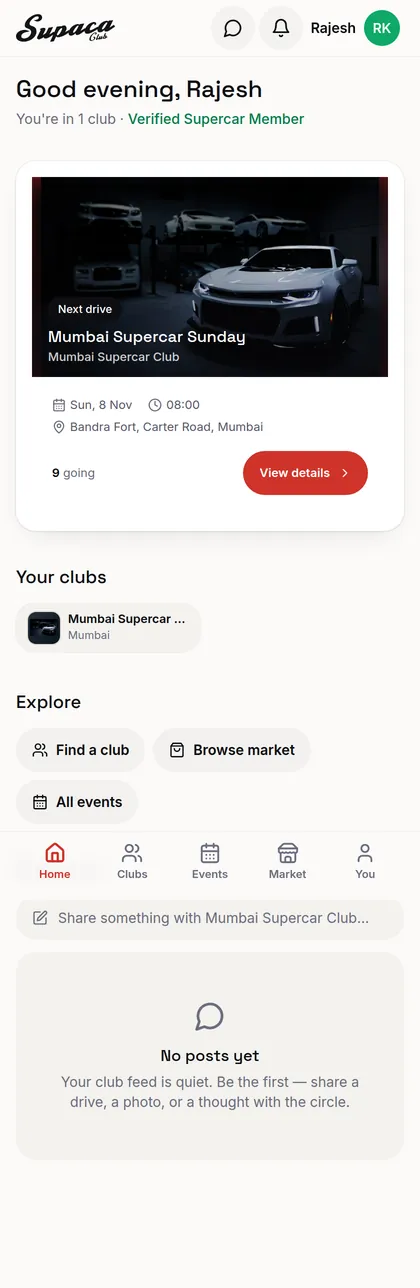
Much of the app leads to the event page.

When members RSVP, they choose which car they're bringing, and "Who's coming" shows each attendee with a verified badge and a colour-coded pill for their car's make.

Outcome

  • 80+verified owners on the platform
  • 10+clubs running their drives through it
  • 5person team, I led design end to end
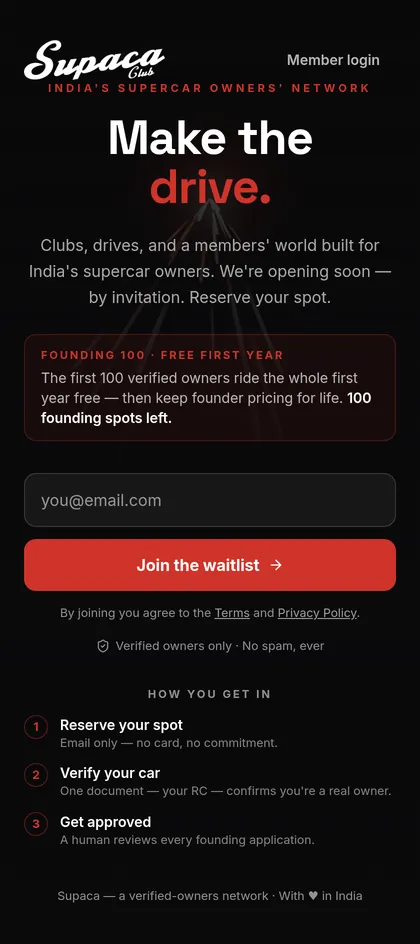
  • The beta is live, with real owners joining through the waitlist
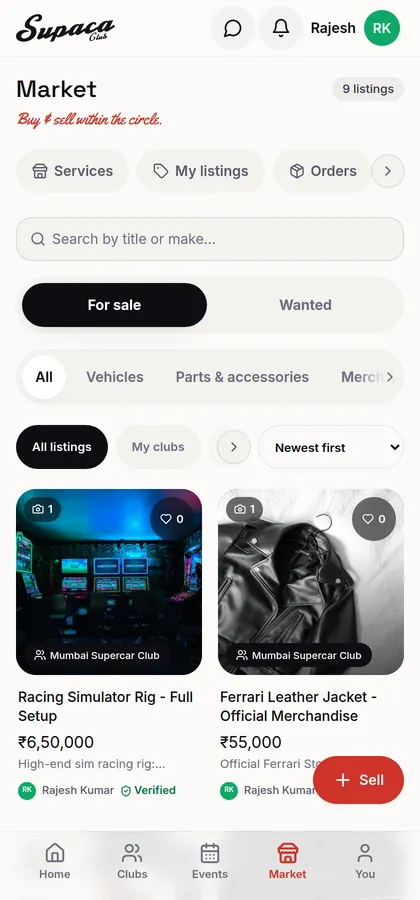
  • The beta runs on the structure I designed, and the vendor marketplace is the part being built on it now
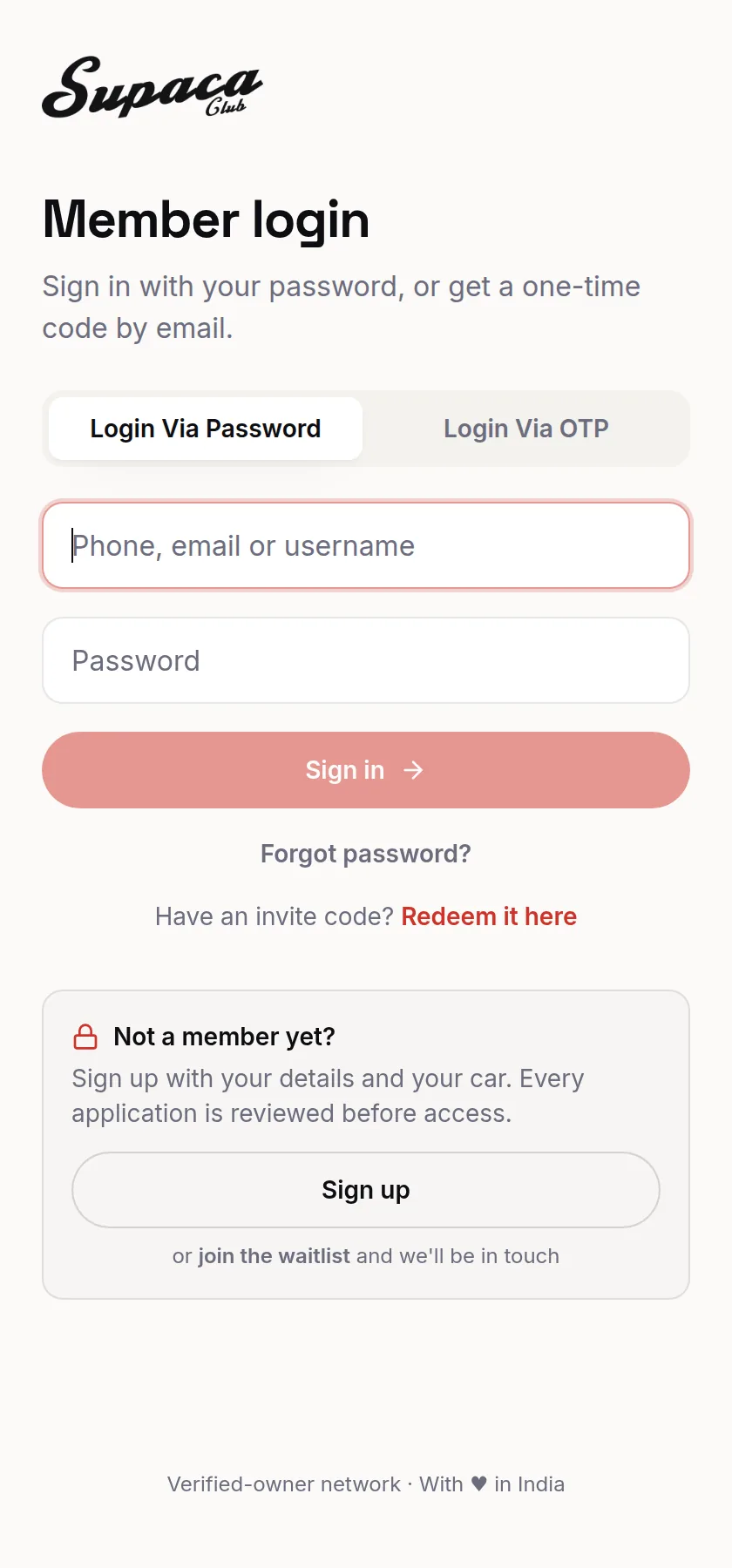
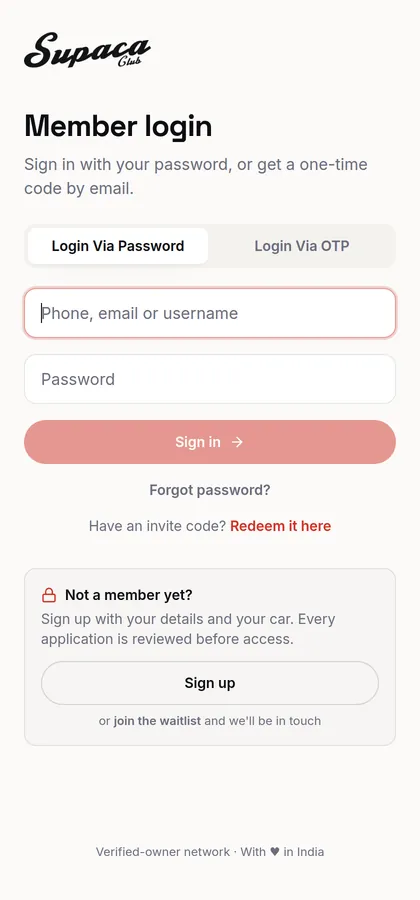
The live beta's member login, invite only.
Invite-only member login.

Reflection

  • Set the structure before the screens. Fixing the information architecture first gave new features a place to go without redesigning navigation.
  • The edge cases carried the trust. Who can see a private club, whether a member joins anything without asking, and what a stranger sees before verification each mattered more than any single feature.

Next —